Launches
ON RECORD22MISSIONS
21 of them reached orbit. The earliest was 1968, the most recent 2026.
ARCHIVE // DAY OF YEAR
22 orbital launches flew on March 14, the earliest of them in 1968, and 21 reached orbit. Wikipedia records 1 spaceflight and astronomy event on March 14. Below are the pictures NASA published on March 14 in 6 different years — each one taken or released on this exact date.
22MISSIONS
21 of them reached orbit. The earliest was 1968, the most recent 2026.
1ENTRY
Spaceflight and astronomy entries from Wikipedia's record of this date, oldest first — from 1995 onward.
6IMAGES
NASA's Astronomy Picture of the Day for March 14, one per year. Some are public domain and some belong to the photographer — each says which.
NASA’s Astronomy Picture of the Day, for this calendar date in each of the last several years.
2026
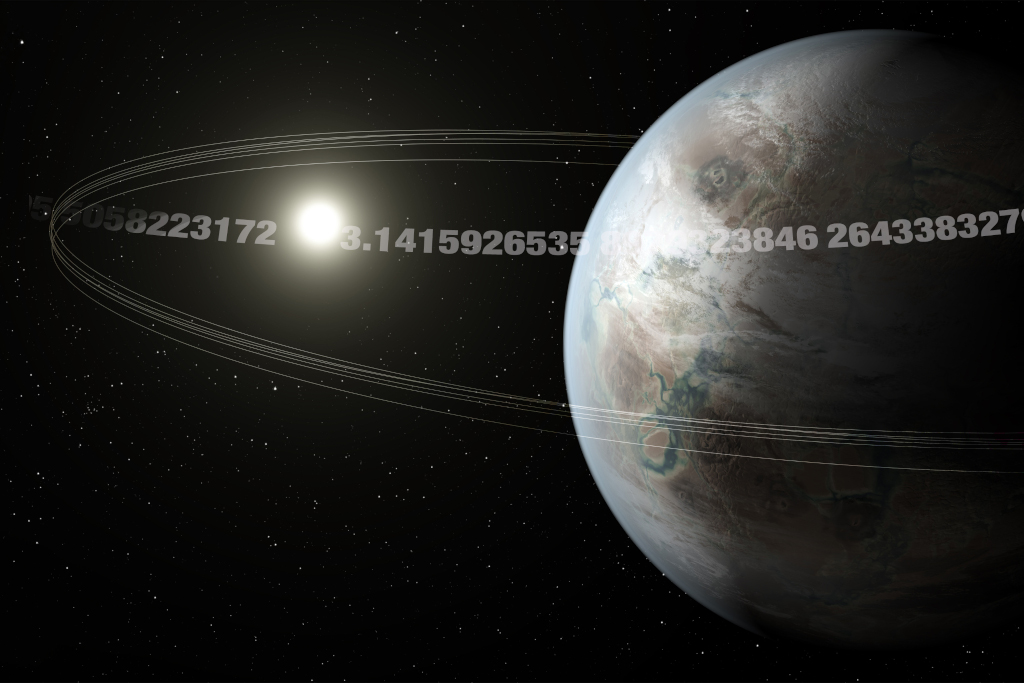
Want to visit a planet that has 3.14 days in a year? Then plan a trip to K2-315b, an earth-sized planet orbiting around a cool, red, M dwarf star about once every 3.14 days. The exoplanet's discovery, based on publicly available data from the planet-hunting Kepler Space Telescope's extended K2 mission, was announced in 2020. K2-315b's measured orbital period in days is nearly equal to the extremely popular irrational number Pi. That puts the exoplanet so close to its parent star that its surface is likely very warm, baking-hot in fact. And this Pi planet is over 185 light-years away. So instead of trying to arrange for an interstellar vacation to K2-315b, there may be easier and more comfortable ways for you to celebrate Pi day on planet Earth.
NASA · public domain
2025
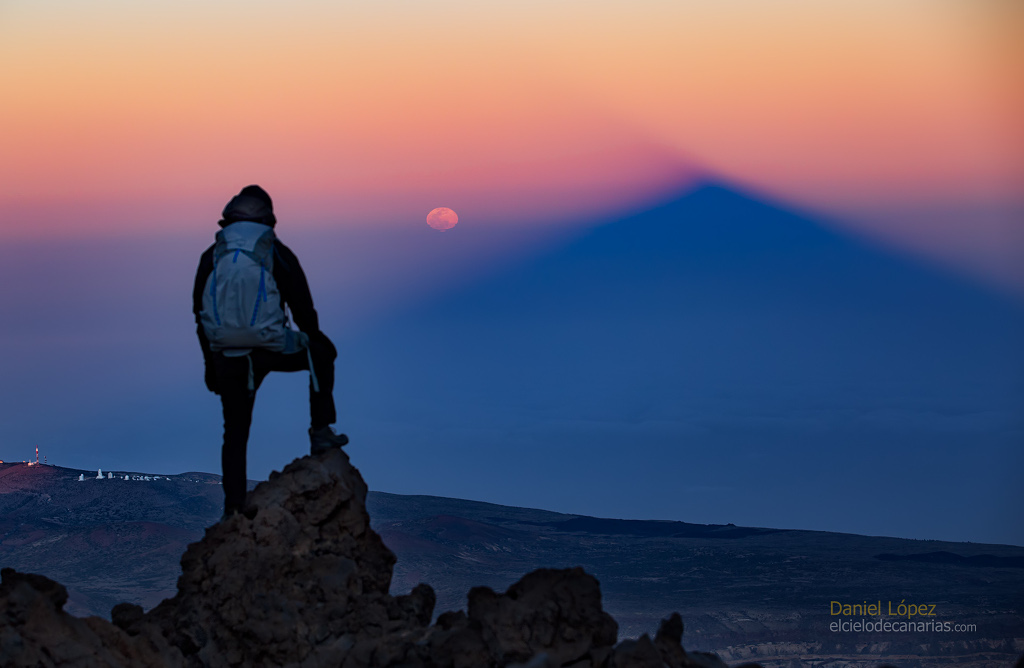
What phase of the Moon is 3.14 radians from the Sun? The Full Moon, of course. Even though the Moon might look full for several days, the Moon is truly at its full phase when it is Pi radians (aka 180 degrees) from the Sun in ecliptic longitude. That's opposite the Sun in planet Earth's sky. Rising as the Sun set on March 9, 2020, only an hour or so after the moment of its full phase, this orange tinted and slightly flattened Moon still looked full. It was photographed opposite the setting Sun from Teide National Park on the Canary Island of Tenerife. Also opposite the setting Sun, seen from near the Teide volcano peak about 3,500 meters above sea level, is the mountain's rising triangular shadow extending into Earth's dense atmosphere. Below the distant ridge line on the left are the white telescope domes of Teide Observatory. Today, March 14 2025, the moon is Pi radians from the Sun at exactly 06:55 UTC. That's about three minutes before the midpoint of the March Full Moon's total lunar eclipse.
© El Cielo de Canarias — used with the credit NASA publishes
2024
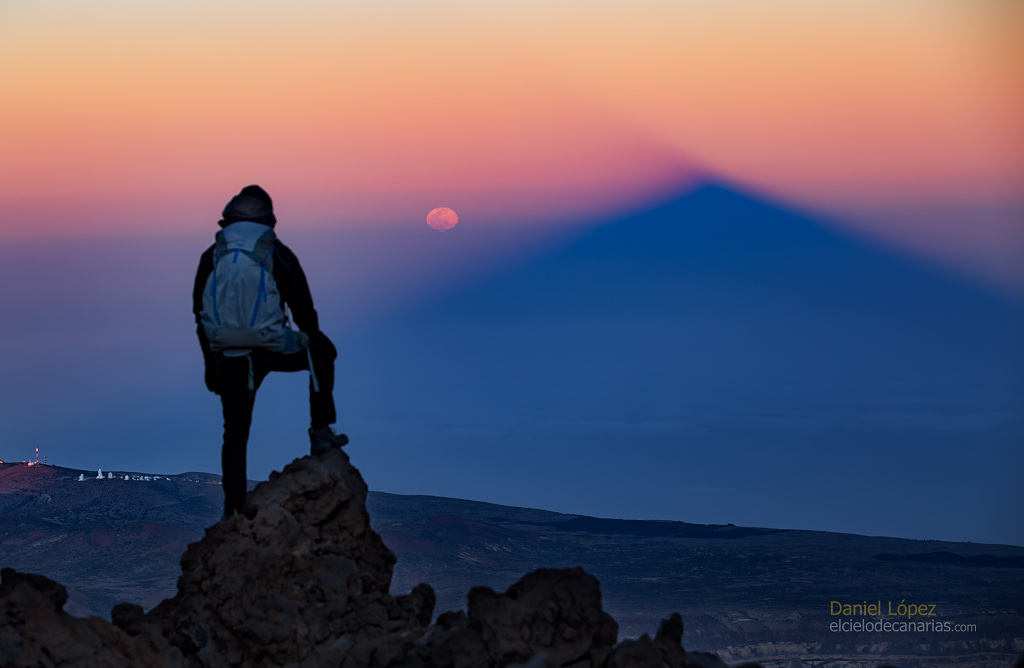
What phase of the Moon is 3.14 radians from the Sun? The Full Moon, of course. Even though the Moon might look full for several days, the Moon is truly at its full phase when it is Pi radians (aka 180 degrees) from the Sun in ecliptic longitude. That's opposite the Sun in planet Earth's sky. Rising as the Sun set on March 9, 2020, only an hour or so after the moment of its full phase, this orange tinted and slightly flattened Moon still looked full. It was photographed opposite the setting Sun from Teide National Park on the Canary Island of Tenerife. Also opposite the setting Sun, seen from near the Teide volcano peak about 3,500 meters above sea level, is the mountain's rising triangular shadow extending into Earth's dense atmosphere. Below the distant ridge line on the left are the white telescope domes of Teide Observatory. Again Pi radians from the Sun, on March 25 the Full Moon will dim slightly as it glides through Earth's outer shadow in a penumbral lunar eclipse.
© El Cielo de Canarias — used with the credit NASA publishes
2023
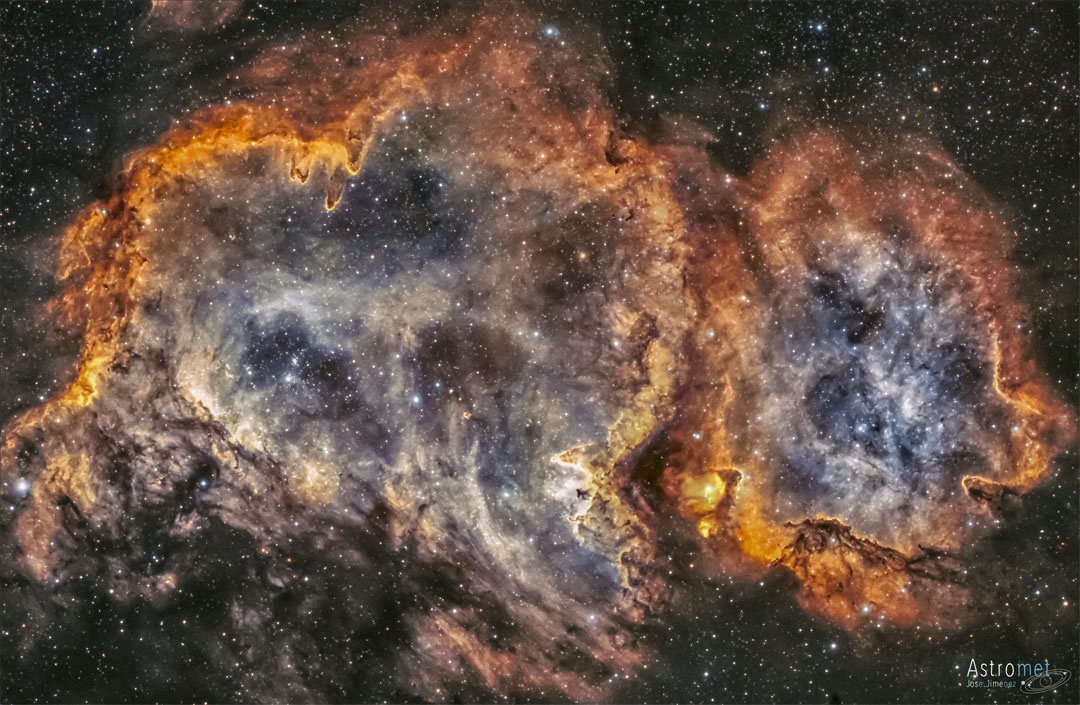
Stars are forming in the Soul of the Queen of Aethopia. More specifically, a large star forming region called the Soul Nebula can be found in the direction of the constellation Cassiopeia, whom Greek mythology credits as the vain wife of a King who long ago ruled lands surrounding the upper Nile river. Also known as Westerhout 5 (W5), the Soul Nebula houses several open clusters of stars, ridges and pillars darkened by cosmic dust, and huge evacuated bubbles formed by the winds of young massive stars. Located about 6,500 light years away, the Soul Nebula spans about 100 light years and is usually imaged next to its celestial neighbor the Heart Nebula (IC 1805). The featured image is a composite of exposures made in different colors: red as emitted by hydrogen gas, yellow as emitted by sulfur, and blue as emitted by oxygen.
© José Jiménez (Astromet) — used with the credit NASA publishes
2022
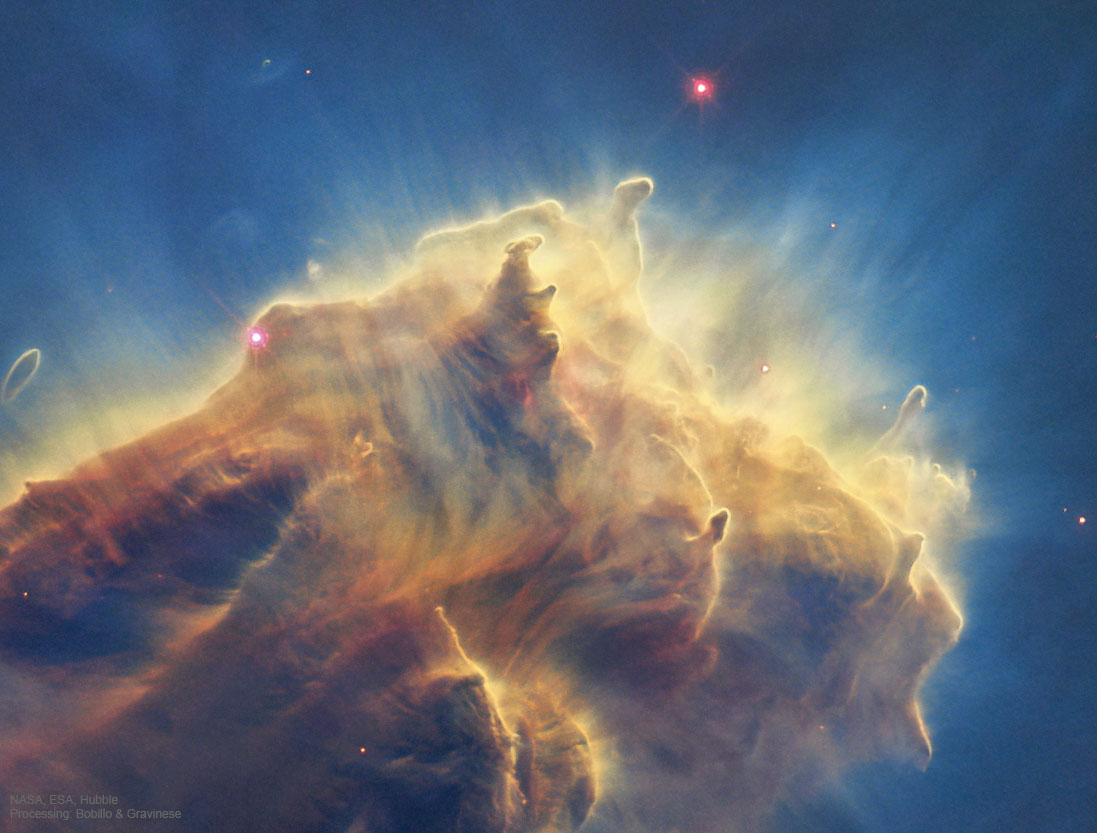
Where do stars form? One place, star forming regions known as "EGGs", are being uncovered at the end of this giant pillar of gas and dust in the Eagle Nebula (M16). Short for evaporating gaseous globules, EGGs are dense regions of mostly molecular hydrogen gas that fragment and gravitationally collapse to form stars. Light from the hottest and brightest of these new stars heats the end of the pillar and causes further evaporation of gas and dust -- revealing yet more EGGs and more young stars. This featured picture was created from exposures spanning over 30 hours with the Earth-orbiting Hubble Space Telescope in 2014, and digitally processed with modern software by experienced volunteers in Argentina. Newborn stars will gradually destroy their birth pillars over the next 100,000 years or so -- if a supernova doesn't destroy them first.
NASA · public domain
2021
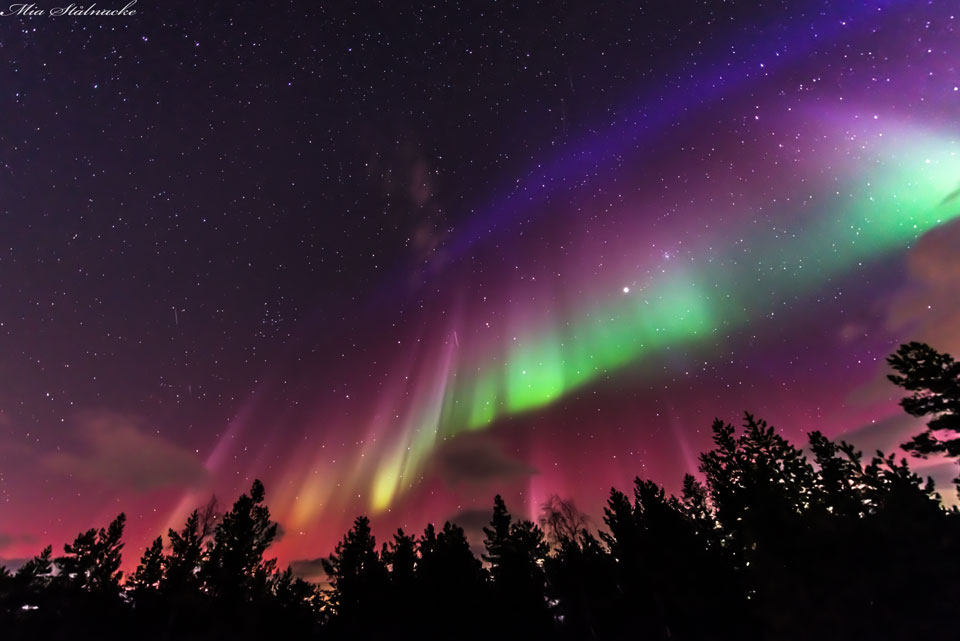
It appeared, momentarily, like a 50-km tall banded flag. In mid-March of 2015, an energetic Coronal Mass Ejection directed toward a clear magnetic channel to Earth led to one of the more intense geomagnetic storms of recent years. A visual result was wide spread auroras being seen over many countries near Earth's magnetic poles. Captured over Kiruna, Sweden, the image features an unusually straight auroral curtain with the green color emitted low in the Earth's atmosphere, and red many kilometers higher up. It is unclear where the rare purple aurora originates, but it might involve an unusual blue aurora at an even lower altitude than the green, seen superposed with a much higher red. Now past Solar Minimum, colorful nights of auroras over Earth are likely to increase. Follow APOD: Through the Free NASA App
© Mia Stålnacke — used with the credit NASA publishes

1995
Norman Thagard becomes the first American astronaut to ride to space on board a Russian launch vehicle.
Norman Thagard ↗Event text and thumbnails come from Wikipedia and are used under CC BY-SA 4.0. Images are drawn only from Wikimedia Commons, which does not accept non-free content — each thumbnail links to its file page, where its licence and author are recorded.
Launch records are from The Space Devs’ Launch Library 2. Pictures are NASA’s Astronomy Picture of the Day; NASA imagery is generally not subject to copyright, but individual APOD entries are frequently the property of the photographer, and each caption says which applies.
General-audience astronomy and spaceflight — none of it a textbook.
As an Amazon Associate I earn from qualifying purchases. Links here cost you nothing extra.
LISTING
Still the best single argument for why any of this matters, and it leaves the arithmetic in. For a reader who wants the science, not just the awe.
LISTING
The case for leaving Earth, written by someone unsentimental about how hard that is. Suits readers who want the argument rather than the poster.
LISTING
Hard-SF problem solving in The Martian's key — for anyone who liked the engineering more than the peril. The only novel on this list.
BROWSE opens an Amazon search, not a specific recommendation.
LINKS AMAZON.COM